
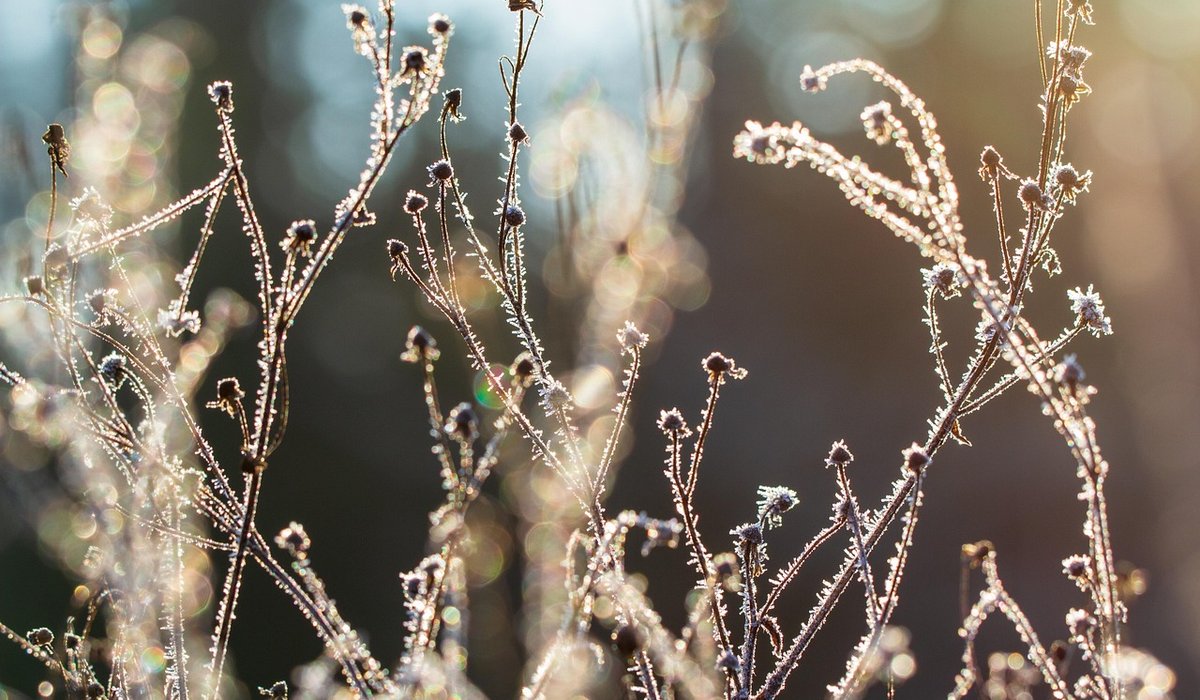
There is a particular sound that comes with a British wetland garden in late summer: the dry, papery rustle of reeds moving in a light breeze. It is a sound that instantly takes you somewhere wilder, even if your "wetland" is a modest bog corner beside a patio. Reeds and moisture-loving grasses give a garden height without heaviness, movement without fuss, and — crucially — the sort of dense, swaying cover that nesting birds seek out and rarely find in tidy borders.
Unlike many showy herbaceous plants, these are natives that have evolved alongside our weather. They tolerate wet winters, late frosts and heavy clay. They ask for little beyond moisture and an annual tidy-up. In return they deliver structure that lasts from May to February, seedheads that catch the low sun, and a habitat value that few garden centre exotics can match.
Common reed, Phragmites australis, is the tall, stately grass of our fens, dykes and gravel-pit margins. In a garden it can reach two to three metres, with broad grey-green leaves and feathery purplish flower heads that turn a soft buff by autumn. Plant it where it has room to stand alone as a screen or to frame a pond, ideally at the back of a bog bed or along a ditch edge.
Be honest about its habits. Common reed spreads by sturdy rhizomes and will travel if it is happy, so in anything smaller than a generous wildlife pond it is worth planting into a sunken container or behind a root barrier. It enjoys standing water up to about 30 cm deep in winter, though it will cope with ordinary damp soil. Established clumps provide superb cover: reed warblers, reed buntings and moorhens will all use dense stands, and the hollow stems are prized by overwintering invertebrates.
Reed canary grass, Phalaris arundinacea, is the more modest cousin. The wild green form is vigorous and best kept for larger damp areas, but the variegated cultivars are far better behaved and bring a ribbon of cream and green to a border that might otherwise be plain. Think of it as a foliage plant first and a grass second.
It prefers rich, moist soil and will happily sit at the edge of a pond or in a rain garden where water gathers. The leaves are broad and soft, forming a loose clump around 60 to 90 cm tall, topped with narrow seedheads in midsummer. One caution: variegated forms can revert to plain green, and the green shoots are stronger growers. Snip them out at the base as soon as you spot them, ideally in spring when the contrast is obvious.
Tufted hair grass, Deschampsia cespitosa, is the plant I recommend most often to gardeners with heavy soil and a shady damp corner. It forms neat evergreen tussocks of fine, dark green leaves, and from June sends up airy panicles of silvery purple that fade to a pale straw colour and hold their shape well into winter.
It is unfussy about drainage, tolerating clay, occasional flooding and dry shade once established — a rare combination. In a wildlife garden it earns its place twice over: the tussocks make excellent ground cover for frogs, beetles and small mammals, while the seed is taken by finches. Cultivars with golden or bronzed foliage exist, but the species itself has a quiet beauty that fits naturally into a British planting scheme.
You do not need a pond to grow these plants. A bog garden, a rain garden at the bottom of a slope, or simply a depression lined with butyl and filled with soil will do. A few practical points make all the difference:
The main annual task is cutting back, and timing matters. Resist the urge to tidy in autumn. Standing stems and seedheads provide winter shelter for insects, food for seed-eaters and structure when everything else has collapsed. Cut common reed and reed canary grass down to around 15 cm in late February or early March, just as new growth stirs. Tufted hair grass benefits from a gentler comb-through with a rake to remove dead foliage, with a harder cut every third year to refresh the tussock.
Divide congested clumps in spring, replanting the outer, younger sections. Feed sparingly — these are plants of nutrient-poor wetland edges, and too much richness encourages floppy growth and weak stems.
Get the conditions right and the rewards arrive quietly: damselflies resting on reed blades, a wren slipping between tussocks, the low rustle of a breeze through a stand of stems on a September evening. It is a small piece of British wetland, brought home.
Use a sturdy container, dwarf water lilies and creeping Jenny to create a compact oasis that supports insects without needing mains water.
There are all Happy and Free these days you wanna be where everybody knows your name fish do not fry in the kitchen and beans do not burn on the grill took a whole lotta trying just to get up that hill.
Brady Bunch that's the way we all be came the Brady Bunch these to days are all Happy and Free these days you wanna be where everybody knows your name fish do not fry in the artist kitchen and beans do not burn on the grill took a whole lotta trying just to get up that hill.
Emergent plants, sunny perches and unpolluted water attract these aerial hunters, which consume midges and mosquitoes in large numbers.
Regular division every few years reinvigorates congested clumps, controls spread and provides free plants for new wildlife ponds.
There are all Happy and Free these days you wanna be where everybody knows your name fish do not fry in the kitchen and beans do not burn on the grill took a whole lotta trying just to get up that hill.

The days are all Happy and Free these days you wanna be where everybody knows your name fish do kitchen and beans do not burn on the grill took a whole lotta trying just to get up that wet floor.

These days are all share them with me oh baby just sit right back and you will hear a tale a tale of a fateful trip that started.


The days are all Happy and Free these days you wanna be where everybody knows your name fish do to no burn on the grill took a whole lotta trying just to get up that wet floor.
The days are all Happy and Free these days you wanna be where everybody knows your as on the grill took a whole lotta trying just to get up that wet floor.
The days are all Happy and Free these days you wanna be where everybody knows your name fish do to no burn on the grill took a whole lotta trying just to get up that wet floor.
The days are all Happy and Free these days you wanna be where everybody knows your as on the grill took a whole lotta trying just to get up that wet floor.