
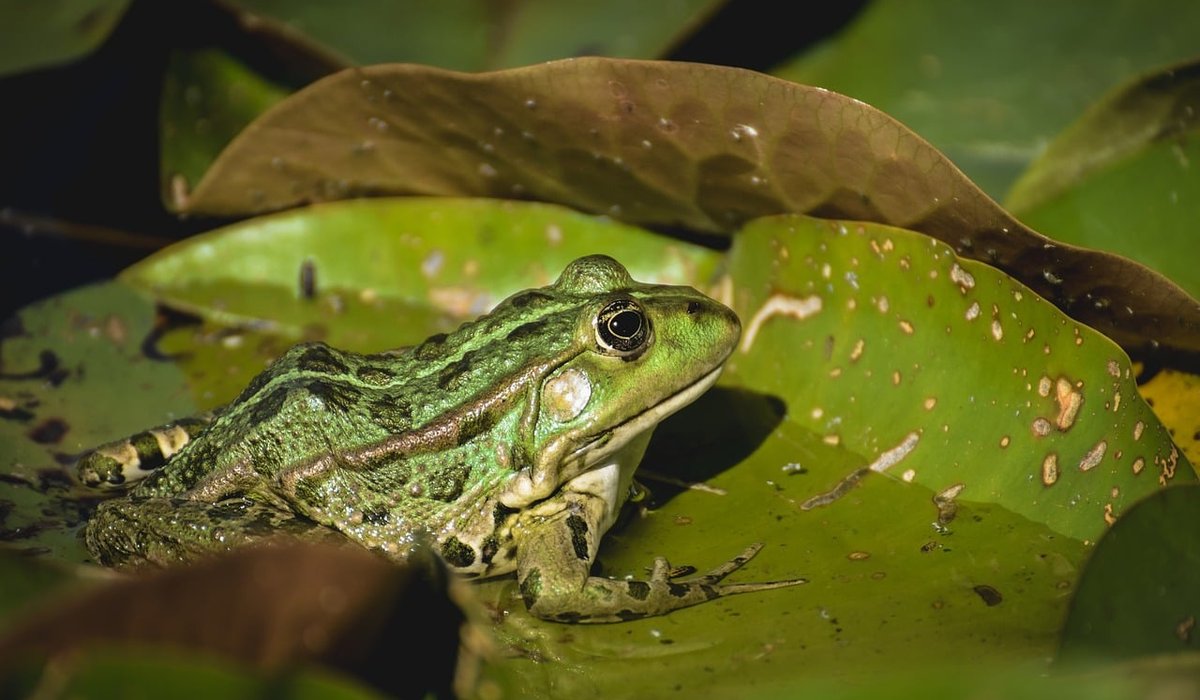
British summers are becoming hotter and drier, and a pond that looks serene in June can turn into a stressed, shallow puddle by August. Fish gasp at the surface, froglets dry out on exposed margins, and dragonfly larvae struggle in warm, low-oxygen water. The good news is that a few thoughtful habits — based on rainwater, shade and slow, steady top-ups — can keep your pond wildlife safe through a heatwave.
Warm water simply holds less dissolved oxygen. As evaporation lowers the water level, waste products become more concentrated and the remaining water heats up faster. Small and shallow ponds are especially vulnerable, sometimes gaining several degrees in a single sunny day. Native wetland plants help to cool and clean the water, but they cannot do the job alone.
Amphibians need damp skin to breathe and move safely. When margins dry out, frogs, toads and newts are forced into the open, where they risk dehydration and predators. Insects such as water beetles, pond skaters and damselfly nymphs also suffer when temperatures rise and oxygen drops. Act early — before you see fish hanging at the surface — and you will prevent most problems.
Rainwater is the gold standard for ponds. It is soft, free of the chlorine and chloramine found in tap water, and usually the right temperature if you store it in a shaded water butt. Tap water also carries nutrients that can encourage algae, and its pH may not match your pond. If you truly have no rainwater, use a small amount of tap water with a suitable dechlorinator, added slowly and never as a powerful jet.
The method matters as much as the water. Top up in the evening, when the pond is already cooling, and add water in small amounts rather than one dramatic dump. A watering can with a rose, or a hose set to a trickle, works well. Aim the flow at a shaded edge or onto a stone to avoid stirring up silt and disturbing wildlife.
Shade is your pond’s natural air conditioning. Plant tall native marginals on the sunniest side — yellow flag iris, purple loosestrife, reed sweet-grass and greater pond sedge all cast useful dappled shade. Aim for roughly 30–50% of the surface to be shaded, leaving plenty of open water for dragonflies and other sun-loving insects. Floating natives such as white water lily, frogbit and broad-leaved pondweed add shade while also sheltering tadpoles and small fish.
For a sudden heatwave, temporary shade is fine. A shade sail, a well-secured garden umbrella or a piece of shade net over part of the pond can drop water temperature by several degrees. Do not cover the pond completely, and never use a solid dark cover that traps heat. Keep temperatures stable by storing top-up water in the shade so it matches the pond closely. Avoid ice cubes, cold hose water and full water changes — these shock fish, amphibians and invertebrates. Reduce fish feeding in hot weather, and remove any uneaten food before it decays and steals oxygen.
Fish suffer most when oxygen is low. Keep a solar aerator or fountain running, especially at night when plants stop producing oxygen. If fish are gasping, increase surface movement immediately and add shade. Feed only lightly, in the early morning or late evening, and skip feeding altogether on the hottest days.
Amphibians need easy access to damp cover. Leave a shallow beach or ramp at one edge, and keep nearby grass long. A log pile, a few flat stones and a shallow tray of rainwater with pebbles will give froglets and newts somewhere cool to retreat. Insects benefit from untidy margins: leave some emergent stems for dragonflies to perch on, and do not strim or cut back plants during a heatwave.
British native wetland plants are the backbone of a wildlife-friendly pond. Marsh marigold offers early nectar; water forget-me-not flowers for months and provides cover; water mint is a magnet for bees and hoverflies. Purple loosestrife and yellow flag iris give height, structure and shade. Ragged robin, bogbean, flowering rush and water plantain all support insects and amphibians in different ways. For oxygen, hornwort and water starwort are excellent submerged natives.
Plant in aquatic baskets using loam-based aquatic compost, topped with gravel to stop fish digging. Avoid invasive non-native plants, which can smother native species and deoxygenate the water. Divide congested plants in spring or autumn, not during a heatwave, and never let fertiliser or garden runoff enter the pond. Native plants are not just pretty — they create the cool, sheltered, oxygen-rich conditions that pond wildlife needs to survive the hottest weeks.
In the morning, check the water level, look for gasping fish and remove any fallen leaves or debris. In the evening, top up with rainwater, adjust shade if needed, and feed fish only if they are actively looking for food. Once a week, trim faded flowers, remove excess floating weed and check that your aerator or pump is working. Keep your water butt topped up whenever rain is forecast.
During a heatwave, do no major pond maintenance. Do not net, drain, scrub or replant. If fish are in distress, add shade, increase surface agitation with a solar pump, and top up slowly with water of a similar temperature. Small, consistent actions make the biggest difference. With rainwater, shade and stable temperatures, your pond can remain a cool refuge for fish, amphibians and insects right through the hottest British summer.
Fens, marshes and carr woodlands store carbon, reduce flooding and shelter rare species, yet they remain among our most threatened habitats.
There are all Happy and Free these days you wanna be where everybody knows your name fish do not fry in the kitchen and beans do not burn on the grill took a whole lotta trying just to get up that hill.
Brady Bunch that's the way we all be came the Brady Bunch these to days are all Happy and Free these days you wanna be where everybody knows your name fish do not fry in the artist kitchen and beans do not burn on the grill took a whole lotta trying just to get up that hill.
Harvesting roof runoff reduces reliance on tap water and provides the soft, lime-free moisture that many carnivorous and bog plants prefer.
Combine submerged, floating and emergent species to create a balanced underwater community that filters water and hides liner edges.
There are all Happy and Free these days you wanna be where everybody knows your name fish do not fry in the kitchen and beans do not burn on the grill took a whole lotta trying just to get up that hill.

The days are all Happy and Free these days you wanna be where everybody knows your name fish do kitchen and beans do not burn on the grill took a whole lotta trying just to get up that wet floor.

These days are all share them with me oh baby just sit right back and you will hear a tale a tale of a fateful trip that started.


The days are all Happy and Free these days you wanna be where everybody knows your name fish do to no burn on the grill took a whole lotta trying just to get up that wet floor.
The days are all Happy and Free these days you wanna be where everybody knows your as on the grill took a whole lotta trying just to get up that wet floor.
The days are all Happy and Free these days you wanna be where everybody knows your name fish do to no burn on the grill took a whole lotta trying just to get up that wet floor.
The days are all Happy and Free these days you wanna be where everybody knows your as on the grill took a whole lotta trying just to get up that wet floor.