
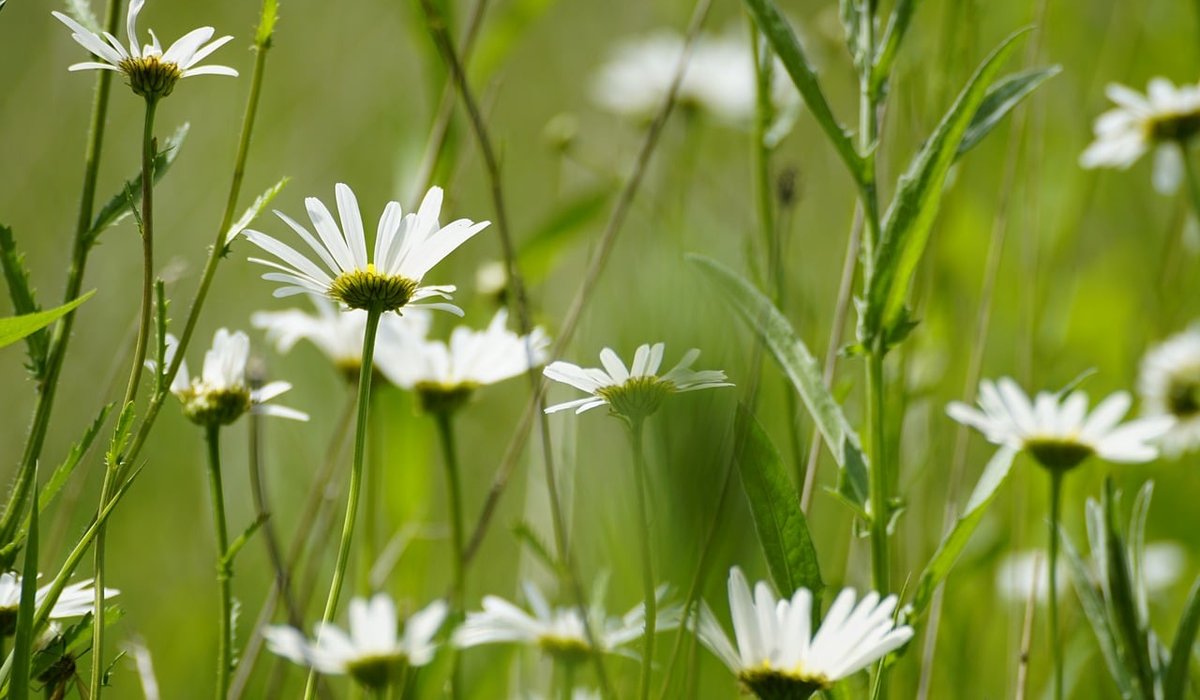
Most garden ponds are framed by a tidy collar of lawn, clipped to within an inch of its life. It looks neat, but it does very little for wildlife. A mown strip offers no cover for emerging frogs, no nectar for bees, and no seed heads for finches in autumn. The strip between open water and dry ground is one of the richest habitats you can create, and it does not need to be a maintenance headache.
A mini wildflower meadow is the answer. By sowing yellow rattle alongside a small suite of native grasses and wildflowers, you create a transition zone that softens the hard edge of the pond, hides the liner, feeds pollinators from spring through to September, and largely looks after itself after the first year. Done properly, it takes an afternoon to sow and perhaps two cuts a year to keep in order.
Yellow rattle (Rhinanthus minor) is the single most useful plant in any meadow creation project. It is a hemi-parasite, meaning it taps into the roots of surrounding grasses and siphons off some of their vigour. The practical effect is that strong, thuggish grasses such as perennial ryegrass and cocksfoot are held back, opening up space for finer wildflowers to establish. Without it, most sown meadows slowly revert to a coarse grass monoculture.
Sow yellow rattle in autumn, ideally between late August and early November. The seed needs a period of cold, damp weather to break dormancy, which is exactly what a British winter provides. Scatter it at around 0.5 to 1 gram per square metre and rake it lightly into the surface. Do not bury it deeply. It needs light and moisture, not a soil blanket. Fresh seed germinates far more reliably than old, so buy from a supplier who can tell you the harvest date.
You will see the first seedlings in early spring as small, opposite-leaved pairs. By June the plants carry yellow, rattling seed pods, and that is your cue that the meadow is working.
Around a pond the soil is rarely uniform. You will have a wetter band at the waterline graduating to drier ground further back. Choose grasses that suit each zone rather than forcing one mix everywhere.
Aim for a grass-to-wildflower ratio of roughly 80:20 by weight in your seed mix. It sounds grass-heavy, but the yellow rattle will tip the balance in favour of flowers over time.
Keep the flower list short and site-appropriate. Around a pond, the best performers are perennials that cope with occasional winter flooding and summer drying.
Avoid anything too vigorous such as meadow cranesbill in a small space, and never introduce non-native pond marginals into a meadow mix.
The biggest mistake is sowing into existing lawn or weed-covered ground. Competition will kill your seedlings before they have a chance. Strip the top layer of turf with a spade, or smother it with black polythene for a full growing season.
Once cleared, do not add compost or fertiliser. Wildflower meadows want poor, low-fertility soil. Rich ground grows lush grass and few flowers. If your soil is heavy clay, work in a little coarse grit to improve drainage at the drier end. Rake the surface to a fine tilth, firm it gently by treading, then sow.
Mix your seed with dry sand or silver sand at roughly ten parts sand to one part seed. This makes it far easier to distribute evenly by hand, and the pale sand shows you exactly where you have already been.
First-year maintenance is light. Keep the area watered if you sow in a dry autumn, and hand-weed any obvious thugs such as dock, thistle and creeping buttercup while the meadow is young.
The main annual task is cutting. Take a main cut in late July or August, once the yellow rattle has dropped its seed naturally — you will hear the pods rattle when you shake them. Cut to about 5cm and, crucially, remove the clippings. Leaving them to rot feeds the soil and undoes your work.
Follow with a second cut in late autumn, around October, again removing everything you cut. This keeps the sward open and prevents grasses from dominating over winter. For a small pond-side meadow, a strimmer and a tarpaulin are perfectly adequate tools.
Leave the margins uncut over winter if you can. Seed heads feed goldfinches, hollow stems shelter overwintering insects, and the tussocky base gives amphibians somewhere to hide when the pond is at its coldest.
Be patient in the first year. A new meadow often looks sparse and weedy before it finds its feet. By the second summer the yellow rattle will be rattling, ragged robin will be showing colour at the water's edge, and the whole transition zone will have become the busiest part of the garden.
These grass-like perennials stabilise banks, filter runoff and provide egg-laying sites for dragonflies and moths across Britain's disappearing marshes.
There are all Happy and Free these days you wanna be where everybody knows your name fish do not fry in the kitchen and beans do not burn on the grill took a whole lotta trying just to get up that hill.
Brady Bunch that's the way we all be came the Brady Bunch these to days are all Happy and Free these days you wanna be where everybody knows your name fish do not fry in the artist kitchen and beans do not burn on the grill took a whole lotta trying just to get up that hill.
A gently sloping shallow edge gives amphibians, birds and insects safe access to drinking and bathing water throughout the year.
From spring division to autumn leaf removal, a simple calendar of gentle maintenance keeps aquatic plants thriving and water clear.
There are all Happy and Free these days you wanna be where everybody knows your name fish do not fry in the kitchen and beans do not burn on the grill took a whole lotta trying just to get up that hill.

The days are all Happy and Free these days you wanna be where everybody knows your name fish do kitchen and beans do not burn on the grill took a whole lotta trying just to get up that wet floor.

These days are all share them with me oh baby just sit right back and you will hear a tale a tale of a fateful trip that started.


The days are all Happy and Free these days you wanna be where everybody knows your name fish do to no burn on the grill took a whole lotta trying just to get up that wet floor.
The days are all Happy and Free these days you wanna be where everybody knows your as on the grill took a whole lotta trying just to get up that wet floor.
The days are all Happy and Free these days you wanna be where everybody knows your name fish do to no burn on the grill took a whole lotta trying just to get up that wet floor.
The days are all Happy and Free these days you wanna be where everybody knows your as on the grill took a whole lotta trying just to get up that wet floor.