
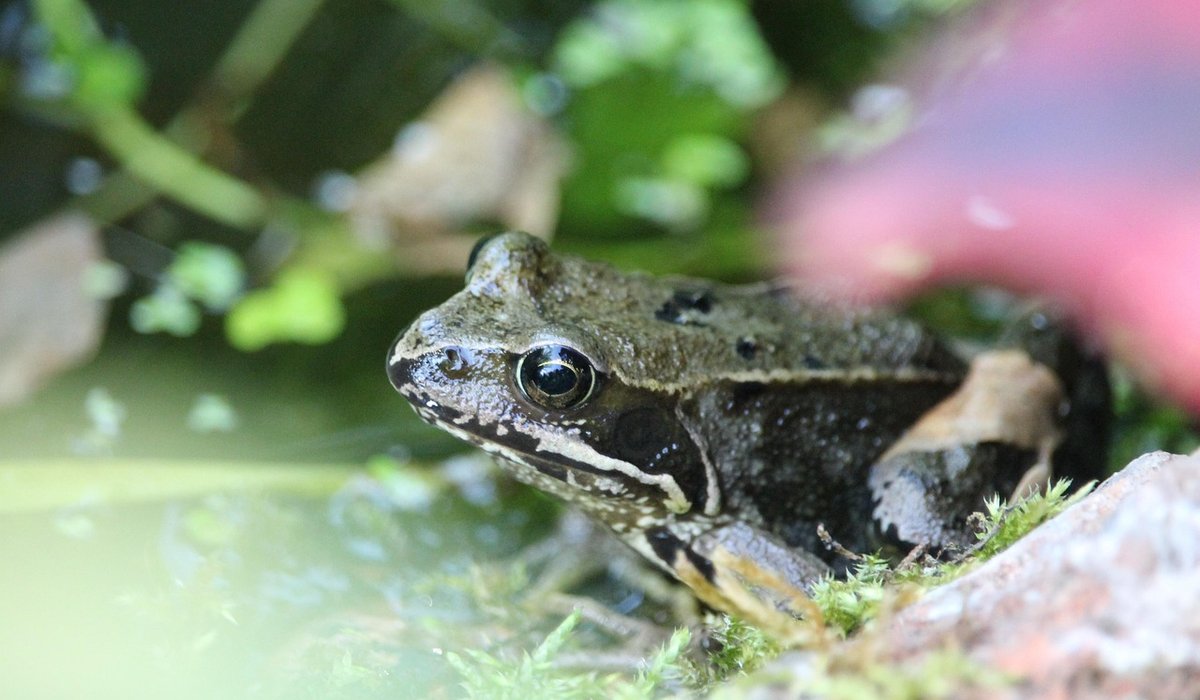
Most of us think of a pond as somewhere to sit and watch dragonflies. But the strip of damp soil around it – the margin, the bog garden, or simply the shady corner where the ground never quite dries out – is where a great deal of the real wildlife gardening happens. Bees, butterflies, hoverflies and moths need nectar from early summer right through to the first frosts, and British wetland wildflowers are among the most generous providers you can grow. They are also beautiful, and they look entirely at home beside open water.
The three plants below – purple loosestrife, meadowsweet and water mint – are all native, all happy in moist or boggy ground, and all superb for pollinators. Plant them together and you have a nectar station that runs from June to September.
Purple loosestrife (Lythrum salicaria) carries tall, upright spikes of magenta-pink flowers from midsummer into early autumn, and it is hard to overstate how much insects love it. On a warm July afternoon a single clump can hold a dozen bumblebees, several hoverflies and the occasional peacock or small tortoiseshell butterfly. It is one of the finest garden plants for red admirals, and its long flowering period means it keeps giving while other flowers fade.
Grow it in full sun, in soil that stays reliably damp. It will cope with the shallow margins of a pond, planted in a basket so the roots sit just below the waterline, or in ordinary border soil as long as you do not let it dry out completely. Expect heights of around 1–1.5 metres. It forms tidy clumps rather than rampaging, though a mature plant can be divided every three or four years to keep it vigorous and to spread it around the garden.
Meadowsweet (Filipendula ulmaria) brings clouds of creamy, frothy flowers on reddish stems from June to September, and the scent – honeyed, faintly almond – is worth growing it for on its own. Insects agree: bees, hoverflies, beetles and butterflies all work the flower heads, and because each head is made up of countless tiny blooms, it stays useful for weeks rather than days.
It is more tolerant of ordinary garden soil than the other two, so it makes a good bridge between a boggy patch and the rest of the border. Give it moisture and it will reward you with 60–120cm of growth. The seed heads hold their shape into winter and look wonderful frosted, so leave them standing rather than cutting back in autumn.
Water mint (Mentha aquatica) is the quiet hero of the trio. Its rounded lilac flowerheads appear later than the others, from August into September, which makes it a vital source of nectar just when many garden plants have finished. Bees, butterflies and hoverflies queue up for it, and the aromatic foliage smells wonderful when you brush past.
It spreads enthusiastically by runners, so plant it in a basket, a sunken pot or a corner where it can roam without smothering smaller plants. It will grow in shallow water up to about 10cm deep, or in any soil that stays wet. Keep it to 30–60cm and cut it back hard in spring if it starts to wander too far.
All three are best planted in spring or early autumn, while the soil is warm and moist. A few practical points make a real difference:
To stretch the season further, underplant these three with spring natives such as marsh marigold and ragged robin, and add hemp agrimony for late-summer butterflies. Leave seed heads and hollow stems standing over winter – they shelter insects and birds will pick at the seeds – then cut back in March, just as new growth starts.
Divide clumps every few years, top up water levels in dry spells, and resist the urge to tidy too thoroughly. A little damp, slightly unruly corner is exactly what bees and butterflies are looking for, and it will reward you from the first warm day of June to the last mild afternoon of September.
Top up water levels with rainwater, provide shade and avoid sudden temperature changes to keep fish, amphibians and insects safe.
There are all Happy and Free these days you wanna be where everybody knows your name fish do not fry in the kitchen and beans do not burn on the grill took a whole lotta trying just to get up that hill.
Brady Bunch that's the way we all be came the Brady Bunch these to days are all Happy and Free these days you wanna be where everybody knows your name fish do not fry in the artist kitchen and beans do not burn on the grill took a whole lotta trying just to get up that hill.
Fens, marshes and carr woodlands store carbon, reduce flooding and shelter rare species, yet they remain among our most threatened habitats.
Harvesting roof runoff reduces reliance on tap water and provides the soft, lime-free moisture that many carnivorous and bog plants prefer.
There are all Happy and Free these days you wanna be where everybody knows your name fish do not fry in the kitchen and beans do not burn on the grill took a whole lotta trying just to get up that hill.

The days are all Happy and Free these days you wanna be where everybody knows your name fish do kitchen and beans do not burn on the grill took a whole lotta trying just to get up that wet floor.

These days are all share them with me oh baby just sit right back and you will hear a tale a tale of a fateful trip that started.


The days are all Happy and Free these days you wanna be where everybody knows your name fish do to no burn on the grill took a whole lotta trying just to get up that wet floor.
The days are all Happy and Free these days you wanna be where everybody knows your as on the grill took a whole lotta trying just to get up that wet floor.
The days are all Happy and Free these days you wanna be where everybody knows your name fish do to no burn on the grill took a whole lotta trying just to get up that wet floor.
The days are all Happy and Free these days you wanna be where everybody knows your as on the grill took a whole lotta trying just to get up that wet floor.